I bought this typewriter in Tacoma, Washington. It is a later model Royal 890--this can be identified by the Litton Industries logo, located to the right of the word Royal. (When I was younger, I used to think that the logo was a lowercase r instead of "li") It and the serial number put this typewriter at roughly 1967. Strangely, it is much easier to find higher-end Royals (like the Safari) and Smith-Coronas (Silent/Silent-Super) than their mid-range equivalents (like the 890, 990, Aristocrat, Telstar, and the Smith-Corona Sterling and Clipper models). This may be because of their prices compared to the additional features offered by the higher-end models (such as Magic Margin, a 1/! key, and a paper guide), which usually added very little to their price. For some reason, this typewriter has a tendency to glow when photographed:
Sunday, August 31, 2014
Sunday, August 17, 2014
1941 Underwood Universal
This typewriter was made in early 1941. I bought it at Red Door Antiques in Mount Vernon, WA. It is easily the best Underwood I have ever owned.
Monday, August 11, 2014
Sunday, August 10, 2014
A So-Called "Russian" typewriter--Olympia SM-1, 1950
In 1950, when this typewriter was made, few Americans had heard of the Olympia portable. Those who were lucky enough to have known about them had no access to them until 1950, when the Inter-Continental Trading Company of New York City began importing them to the United States. However, at the same time, a well-known foreign correspondent, Theodore H. White, was visiting Russia, where a diplomat sold him a light gray Olympia for $25. While it said "made in Germany" on the rear, he thought that it could have been made in Russia, and not "Germany". Add to that the general fear of Communism, and McCarthyism, and suddenly the German typewriter became "possibly Russian." The articles below are the results.
And, of course, as it turned out, the J.K. Gill Company, the store that wasn't sure if they would ever sell Olympia portables, became one of the biggest Olympia dealers by the end of the 1950s...how's that for irony?Simply by looking at the typewriter, one thing becomes completely clear--the manufacturer took a lot of pride in their product--notice the raised Olympia logo in polished chrome. The typewriter has soundproofing in many places, including the resting place of the ribbon cover. The plastic knob caps are designed to look like
pearls.
I forgot to mention the most ironic part--this typewriter is painted red!
The Amazingly Sturdy Smith Corona Classic 12
I went to the big Seattle Goodwill, and found one of the last Smith-Corona manual portable typewriters made, a Smith-Corona Classic 12 Correction/Typewriter. When I transferred buses, the case fell open, and out fell the Smith-Corona. After popping the ribbon cover back into place, I noticed that only 2 parts had been broken--the plastic margin stop toppers!
The very last manual Smith-Corona typewriter was produced on May 11, 1983Wednesday, July 30, 2014
1956 Royal Quiet Deluxe
While its serial number dates it to 1956, this typewriter was made for the 1957 model year. The easiest way to determine whether your Royal Quiet Deluxe was made for 1957 is by looking at either the keyboard, or the ribbon carrier. If the carrier is made of more than one part, it is from the 1957 model year or later. If the keyboard has 1/! and =/+ keys it is also a 1957 or later model.
Wednesday, July 23, 2014
Trip to Snohomish, 7/20/14
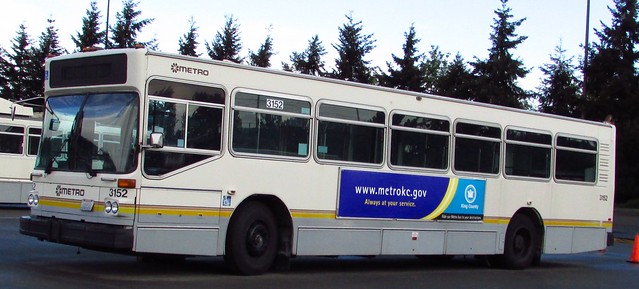
For those living in Seattle, the Metro Employees' Historical Vehicle Association (MEHVA) operates tours to various destinations in their historic fleet. Here are some pictures from my first bus tour (For some reason, I forgot to take a picture of the outside of our bus, in all of its "Sunshine" paint schemed glory--Metro operated many white buses with brown, yellow, and ochre trim. For a photo of the exact bus, go here https://c2.staticflickr.com/8/7360/13923694990_322218f386_z.jpg) For more information on the bus tours, go here: http://www.mehva.org/index.php
I love the use of brown, and "wood" inside the bus. It's amazing how much more comfortable bus seats were when this bus was produced (1987), than they are now (2014). Now, the bus seats are harder, and their padding is thinner.
Here is the $40 typewriter I bought. The same shop was selling a pink Royal Quiet Deluxe for $500. Personally, I prefer the Futura 800's lines. Out of the four Royal Futura 800s I have owned, two have been horrible. The other two have been perfect. (I sold the other one when its case went). The reason (I think) for the quality gap in the Futura is as follows: When Royal began making the Futura, they moved production of their portables from Hartford, Connecticut, to a brand-new factory in Sunshine, Missouri. They had to move all of their equipment to the new factory, and find new labor. The quality gap this creates is not specific to Royal. Another excellent example is the Continental portable: Wanderer-Werke originally made the Continental in Germany. They moved production to Belgium after World War Two, and quality suffered. However, Royal was able to fix the gap by September, 1960, when this typewriter was produced. By the time that they introduced the Safari (July/August, 1962), all of their full-size portables were of a consistent quality level. This level of quality somehow carried over to Portugal, when Litton outsourced it. (Say what you will about the plastic side panels that always seem to be bizarrely faded, mechanically, the Portuguese portables are just as good)
Interesting Side Note: If you look at the patent numbers on the underside of the ribbon cover on a Royal Custom II (or Sabre, or any full-size Royal Portable, including those made in Portugal), the newest patent number is for the Futura's design. (Even on the Safari, mainly because the ribbon cover is a shared component.) If you look at the side view of the Futura, and compare it to the side view of a Sabre/890/Custom II/Custom III/Custom IV/990/Sears Cutlass (the gold one), their lines are incredibly similar.
Subscribe to:
Posts (Atom)